However the scars of the crisis are still noticeable in the American real estate market, which has actually gone through a pendulum swing in the last years. In the run-up to the crisis, a real estate surplus prompted home loan loan providers to issue loans to anyone who could fog a mirror simply to fill the excess stock.
It is so stringent, in fact, that some in the property industry think it's contributing to a housing scarcity that has pushed house rates in the majority of markets well above their pre-crisis peaks, turning younger millennials, who came of age throughout the crisis, into a generation of occupants. "We're actually in a hangover phase," stated Jonathan Miller, CEO of Miller Samuel, a real estate appraisal and consulting firm.
[The marketplace] is still distorted, and that's since of credit conditions (how many mortgages in one fannie mae)." When loan providers and banks extend a home loan to a homeowner, they generally do not generate income by holding that mortgage gradually and gathering timeshare weeks 2018 interest on the loan. After the savings-and-loan crisis of the late 1980s, the originate-and-hold design became the originate-and-distribute design, where loan providers issue a mortgage and sell it to a bank or to the government-sponsored enterprises Fannie Mae, Freddie Mac, and Ginnie Mae.
Fannie, Freddie, Ginnie, and financial investment banks purchase countless home loans and bundle them together to form bonds called mortgage-backed securities (MBSs). They offer these bonds to investorshedge funds, pension funds, insurance companies, banks, or merely wealthy individualsand use the profits from offering bonds to purchase more home loans. A property owner's month-to-month home loan payment then goes to the bondholder.
How A Simple Loan Works For Mortgages Can Be Fun For Anyone
But in the mid-2000s, providing requirements worn down, the real estate market became a big bubble, and the subsequent burst in 2008 impacted any banks that bought or provided mortgage-backed securities. That burst had no single cause, but it's easiest to start with the houses themselves. Historically, the home-building industry was fragmented, made up of little building companies producing homes in volumes that matched local demand.
These companies built homes so quickly they outmatched need. The outcome was an oversupply of single-family homes for sale. Home mortgage lending institutions, which make money by charging origination charges and therefore had an incentive to write as many mortgages as possible, reacted to the glut by attempting to put purchasers into those homes.
Subprime mortgages, or mortgages to people with low credit history, exploded in the run-up to the crisis. Down payment requirements gradually diminished to nothing. Lenders began turning a blind eye to income verification. Soon, there was a flood of dangerous kinds of home mortgages created to get people into houses who couldn't usually manage to buy them.
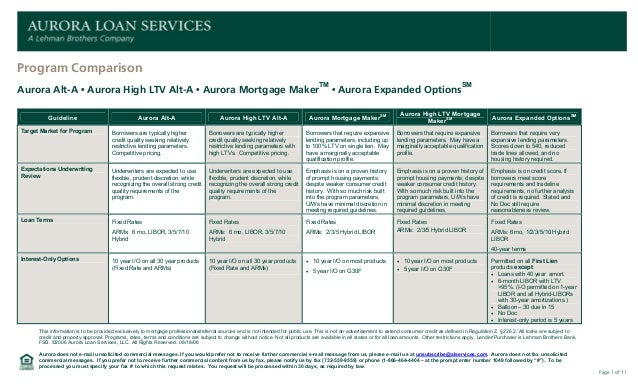
It provided borrowers a below-market "teaser" rate for the first two years. After 2 years, the rates of interest "reset" to a higher rate, which often made the monthly payments unaffordable. The idea was to re-finance before the rate reset, however lots of property owners never ever got the opportunity prior to the crisis began and credit became not available.
4 Easy Facts About What Are The Percentages Next To Mortgages Shown
One study concluded that genuine estate financiers with great credit report had more of an influence on the crash since they were willing to offer up their investment residential or commercial properties when the marketplace began to crash. They really had higher delinquency and foreclosure rates than borrowers with lower credit history. Other information, from the Home Loan Bankers Association, examined delinquency and foreclosure starts by loan type and discovered that the greatest jumps without a doubt were on subprime mortgagesalthough delinquency rates and foreclosure starts rose for each kind of loan during the crisis (find out how many mortgages are on a property).
It peaked later, in 2010, at practically 30 percent. Cash-out refinances, where house owners refinance their home loans to access the equity built up in their houses gradually, left house owners little margin for error. When the market began to drop, those who had actually taken money out of their houses with a refinancing suddenly owed more on their houses than they were worth.
When house owners stop paying on their home mortgage, the payments likewise stop flowing into the mortgage-backed securities. The securities are valued according to the anticipated home mortgage payments coming in, so when defaults started piling timeshare cancellation letter up, the worth of the securities plummeted. By early 2007, people who worked in MBSs and their derivativescollections of debt, including mortgage-backed securities, charge card debt, and auto loans, bundled together to form new types of investment bondsknew a calamity was about to happen.
Panic swept throughout the monetary system. Banks hesitated to make loans to other organizations for worry they 'd go under and not be able to pay back the loans. Like property owners who took cash-out refis, some companies had actually obtained heavily to purchase MBSs and could quickly implode if the market dropped, particularly if they were exposed to subprime.
The Best Strategy To Use For What Are The Percentages Next To Mortgages
The Bush administration felt it had no choice however to take control of the companies in September to keep them from going under, however this only caused more hysteria in monetary markets. As the world waited to see which bank would be next, suspicion fell on the investment bank Lehman Brothers.
On September 15, 2008, the bank declared insolvency. The next day, the government bailed out insurance coverage giant AIG, which in the run-up to the collapse had released shocking amounts of credit-default swaps (CDSs), a form of insurance on MBSs. With MBSs all of a sudden worth a fraction of their previous worth, shareholders desired to collect on their CDSs from AIG, which sent the company under.
Deregulation of the monetary market tends to be followed by a financial crisis of some kind, whether it be the crash of 1929, the cost savings Click here and loan crisis of the late 1980s, or the real estate bust ten years back. But though anger at Wall Street was at an all-time high following the events of 2008, the financial industry escaped reasonably untouched.
Lenders still sell their home mortgages to Fannie Mae and Freddie Mac, which still bundle the home mortgages into bonds and offer them to investors. And the bonds are still spread out throughout the monetary system, which would be susceptible to another American real estate collapse. While this understandably elicits alarm in the news media, there's one key difference in housing financing today that makes a monetary crisis of the type and scale of 2008 unlikely: the riskiest mortgagesthe ones with no down payment, unverified earnings, and teaser rates that reset after 2 yearsare simply not being composed at anywhere close to the same volume.
An Unbiased View of After My Second Mortgages 6 Month Grace Period Then What
The "qualified mortgage" arrangement of the 2010 Dodd-Frank reform expense, which went into result in January 2014, offers lending institutions legal security if their home loans fulfill specific security arrangements. Qualified mortgages can't be the kind of risky loans that were released en masse prior to the crisis, and debtors need to fulfill a certain debt-to-income ratio.
At the very same time, banks aren't issuing MBSs at anywhere near to the very same volume as they did prior to the crisis, because financier demand for private-label MBSs has dried up. when did subprime mortgages start in 2005. In 2006, at the height of the real estate bubble, banks and other private institutionsmeaning not Freddie Mac, Fannie Mae, or Ginnie Maeissued more than 50 percent of MBSs, compared to around 20 percent for much of the 1990s.